
Industry Solution · Medical Manufacturing
Coolant Filtration for Medical Device Manufacturing
ISO 13485
Compatible with medical QMS
IMPLANTS
Bone screws, cages, joints
1µ
Sub-micron polishing for implant work
Ti / Co-Cr
Engineered for medical alloys
WHY IT MATTERS
Medical Device Cleanliness Starts at the Coolant Sump
Medical device manufacturing produces components that go inside the human body. The regulatory environment, the surface finish standards, and the consequences of a quality escape are categorically different from general manufacturing. Coolant cleanliness becomes part of process validation, not a maintenance topic.
The materials are demanding. Titanium and titanium alloys dominate orthopedic implants. Cobalt-chromium is standard for joint replacements. 17-4 PH stainless steel is widely used in surgical instruments. PEEK and other engineering polymers appear across implant and device categories. Each material has its own filtration profile, and many medical operations machine multiple materials in adjacent cells.
CoolantFilters.com configures filtration systems for medical manufacturers operating under ISO 13485 and FDA 21 CFR Part 820 — supporting the documentation, repeatability, and surface finish standards that medical production requires.
INDUSTRY CHALLENGES
Filtration Challenges in Medical Manufacturing
Medical machining concentrates filtration challenges into a small set of high-stakes problems.
Surface finish standards on implants
Implant surfaces are tightly specified — sometimes to support tissue integration, sometimes to prevent debris generation, always to meet documented surgical requirements. Recirculating fines mark surfaces and force scrap.
Regulatory documentation burden
ISO 13485 and FDA 21 CFR Part 820 expect documented process controls. Filtration with traceable specifications, validated service intervals, and supplier documentation reduces audit complexity.
Micro-machining and Swiss-type precision
Bone screws, dental components, vascular instruments, and similar parts are produced on Swiss-type lathes and micro-machining cells where coolant cleanliness directly drives part-to-part repeatability.
Mixed-material biocompatible alloys
Titanium and cobalt-chromium machining cells often run alongside stainless steel work. Cross-contamination control matters because biocompatibility validation can be material-specific.

RECOMMENDED FILTRATION APPROACH
A Validated, Documented Filtration Approach
Most medical operations benefit from gravity bed filtration as the polishing stage, with bag or cartridge housings providing fine and ultra-fine particle capture. For ferrous-rich operations (stainless instruments, surgical tooling), magnetic pre-filtration adds value. For titanium and cobalt-chromium implant work, magnetic separation is largely irrelevant and the filtration architecture concentrates on fine-micron media.
Standalone systems are usually preferred over central systems in medical manufacturing because cross-contamination risk is significantly lower and process documentation is cleaner when each cell has its own validated filtration profile.
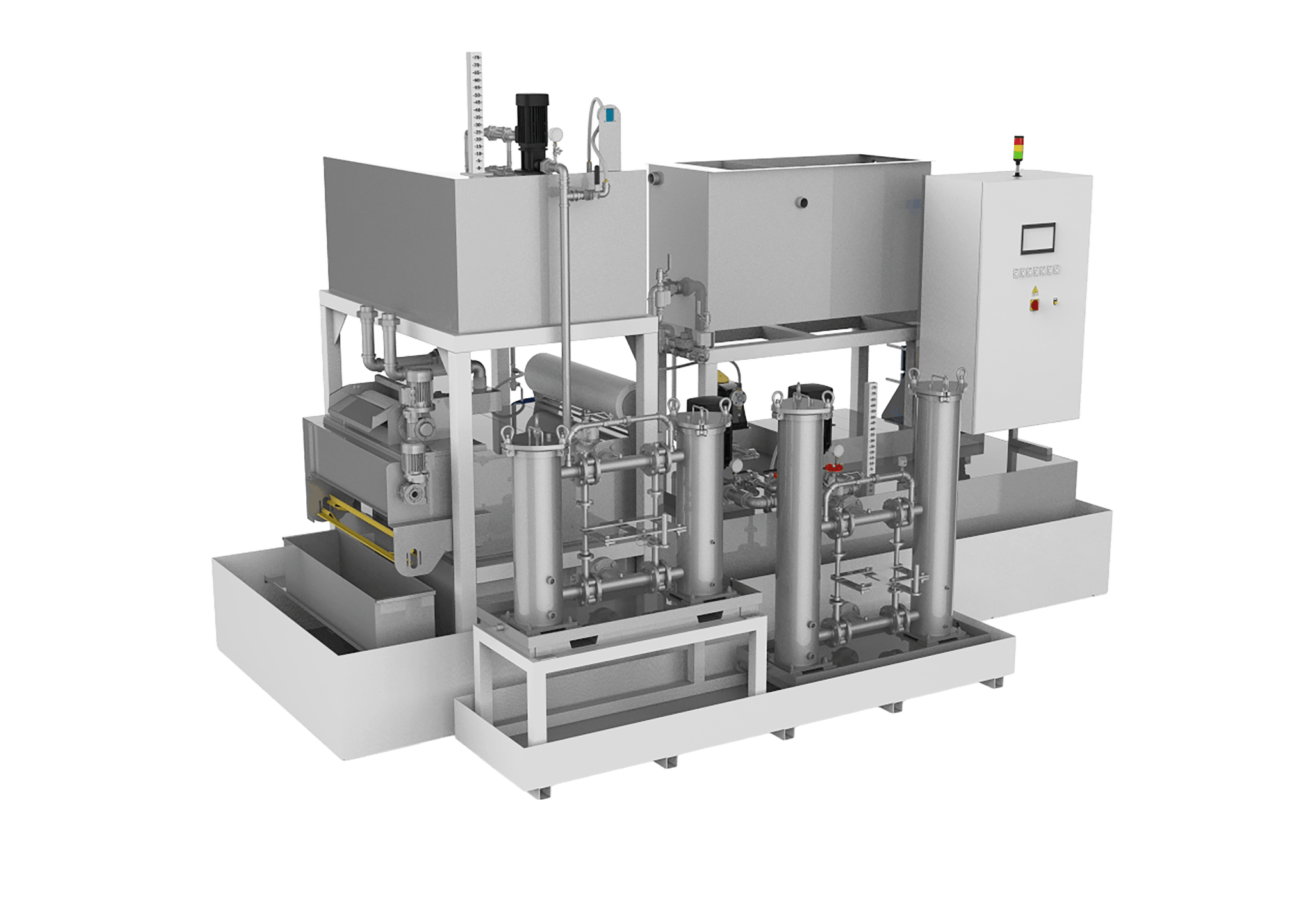
Bag & Cartridge Housings
Sub-micron polishing capability for the tightest implant surface finish requirements.
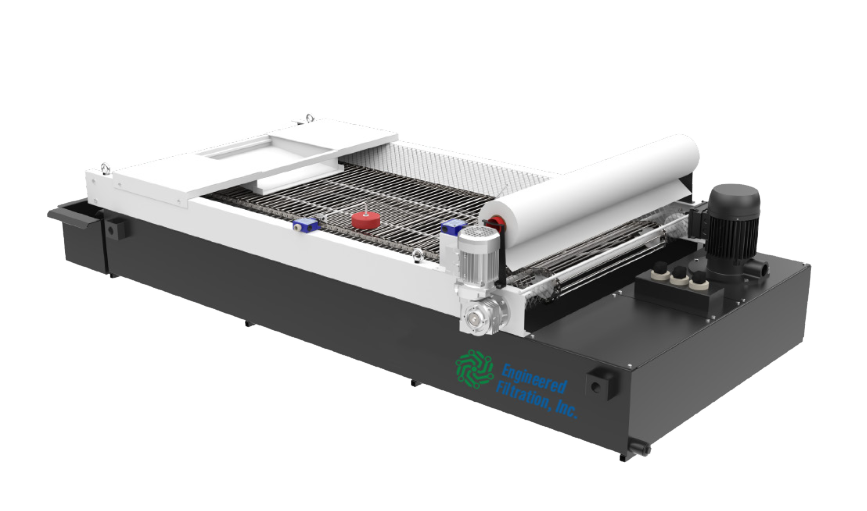
Gravity Bed Filters
Fine-micron disposable media for surface-finish-grade clarity on implant and instrument production.
Filter Media
Traceable replacement media with documented micron ratings supporting ISO 13485 records.
TECHNICAL SPECIFICATIONS
Reference Configuration for Medical Cells
Common Materials
- Titanium and Ti-6Al-4V (orthopedic implants, dental)
- Cobalt-chromium (joint replacements, surgical instruments)
- 17-4 PH and 316L stainless steel (instruments, devices)
- PEEK and other implant-grade polymers
- Magnesium (resorbable implants)
- Nitinol (vascular stents, guidewires)
Common Processes
- Swiss-type turning (bone screws, dental abutments)
- Micro-machining (vascular components, micro-fluidic devices)
- Precision milling (orthopedic plates, spinal cages)
- Surface and cylindrical grinding (instrument finishing)
- Wire EDM (vascular and dental components)
- Honing and lapping (mating surfaces)
Medical operations vary significantly — Swiss-type instrument production, large orthopedic implant lines, and micro-machining cells each look different. The reference profile below covers a typical mid-volume implant or instrument cell.
| Parameter | Typical Recommendation |
|---|---|
| Typical flow rate | 5–60 GPM per cell |
| Coolant type | Water-soluble (most cells), straight oil (some Swiss-type) |
| Filtration target | 1–10 micron |
| Magnetic pre-filter | Yes for ferrous (stainless instruments); no for Ti/Co-Cr implants |
| Tramp oil management | Important for water-based systems |
| Documentation | Supports ISO 13485 / 21 CFR Part 820 records |
| Architecture | Standalone preferred for cross-contamination control |
| Replacement media | Traceable, documented spec |
BUSINESS CASE
The Medical Manufacturing ROI Argument
In medical machining the highest cost of poor filtration is rarely the coolant or the tooling — it is scrap on validated parts. A rejected orthopedic implant or surgical instrument carries the cost of premium material, certified machining time, and inspection, plus the schedule impact on a regulated production run. Filtration ROI in medical is best calculated against scrap reduction, surface finish consistency, and the audit time saved by clean documentation.
Quantify the Cost of a Single Rejected Medical Part
Use our ROI Calculator to model the economics specific to medical manufacturing — premium biocompatible material cost, certified machining time, and the regulatory schedule impact of scrap. Filtration commonly pays back inside the first year on scrap reduction alone.
Compliance Context for Medical Manufacturers
Designed for ISO 13485 and FDA 21 CFR Part 820 Operations
Medical manufacturing audits routinely examine fluid management as part of process control. Filtration systems that provide documented specifications, scheduled service intervals, and supplier traceability simplify compliance.
For medical device manufacturers operating under FDA 21 CFR Part 820 and ISO 13485, coolant management documentation flows into the quality system. Filtration vendors that supply traceable spec sheets and standardized, identified replacement media support the documentation regime that medical production requires.
FREQUENTLY ASKED QUESTIONS
Common Questions from Medical Manufacturers
What coolant filter is best for orthopedic implant machining?
Implant machining benefits from fine-micron gravity bed filtration as the primary stage, often supported by bag or cartridge polishing for the tightest surface finish requirements. Because most implant materials (titanium, cobalt-chromium) are non-magnetic, magnetic separation usually adds limited value in dedicated implant cells.
How does coolant filtration support ISO 13485 compliance?
ISO 13485 expects documented process controls. Filtration with traceable micron specifications, identified replacement media, and a documented service schedule provides the audit-ready paper trail that the quality system requires. The filtration vendor should supply spec sheets and replacement media with documented identification.
What micron rating is needed for surgical instrument production?
Surgical instrument production typically targets 5–25 micron coolant clarity depending on the surface finish requirement on the print. Polished mating surfaces and cutting edges generally benefit from finer filtration in the 1–10 micron range. The exact target should be set against the surface specification rather than a generic recommendation.
Are central or standalone coolant systems better for medical manufacturing?
Standalone systems are usually preferred in medical manufacturing because cross-contamination between materials and between validated processes is a documented risk. Standalone filtration also produces cleaner per-cell documentation, which aligns with the way medical quality plans are structured.
Does coolant filtration affect implant biocompatibility?
Indirectly, yes. Cross-contamination from machining residues, coolant additives, or particles from other materials can introduce variables into the post-machining cleaning and validation process. Clean, well-managed coolant supports a more consistent baseline for downstream cleaning and biocompatibility validation.
How is filtration handled for Swiss-type micro-machining cells?
Swiss-type cells producing micro-components benefit from finer filtration than the flow rates would suggest, because micro-machining tolerances are tight and even small particles can mark finished surfaces. A small-format gravity bed system with fine media, supplemented by cartridge polishing, is a common configuration for Swiss-type instrument and dental work.
FINAL CTA SECTION
Built for Regulated Medical Production
Tell us about your medical manufacturing program — implant family, regulatory regime, surface finish requirements, and the documentation your quality system expects. We will design a filtration solution your auditors will appreciate.