
Industry Solution · Aerospace
Coolant Filtration for Aerospace Machining
Aerospace machining operates at the intersection of exotic materials, tight tolerances, and zero-defect quality regimes. Filtration systems engineered for titanium, Inconel, Hastelloy, and composite materials — supporting flight-critical component production with documented, traceable cleanliness.
TITANIUM
Engineered for exotic alloy fines
AS9100
Compatible with aerospace QMS
1µ
Sub-micron polishing capability
5-AXIS
Sized for high-pressure 5-axis cells
WHY IT MATTERS
Aerospace Coolant Cleanliness Is a Quality Requirement
Aerospace component machining produces parts that fly. The cost of a quality escape on a flight-critical component dwarfs every other consideration. That reality changes how filtration is specified — cleanliness becomes part of the quality plan, not a maintenance line item.
The materials make the problem harder. Titanium chips are pyrophoric and can ignite in a contaminated sump. Inconel and other nickel-based superalloys work-harden under poor coolant delivery, scrapping cutting tools and surface finishes. Composites and CFRP generate fine dust that emulsifies into water-based coolants and clogs filters in hours.
CoolantFilters.com configures filtration systems specifically for aerospace machining environments — high-pressure 5-axis cells, titanium-rated handling, sub-micron polishing for tight-tolerance work, and documented cleanliness profiles that support AS9100 and NADCAP audit requirements.
INDUSTRY CHALLENGES
Filtration Challenges Unique to Aerospace
No two aerospace shops machine the same mix, but the challenges concentrate around four recurring themes.
Titanium chip safety and pyrophoric risk
Fine titanium chips can ignite under the right conditions. Coolant systems for titanium work require chip handling that minimizes accumulation and supports safe disposal.
Work-hardening alloys and surface finish drift
Inconel, Waspaloy, and similar superalloys are punishing on cutting tools. Stable, clean, well-delivered coolant is the difference between predictable tool life and chronic scrap.
Composite dust contamination
CFRP and other composites generate fine, conductive dust that clogs conventional filtration in hours and contaminates water-based coolant streams. Specialized filtration is required.
Documented cleanliness for AS9100 / NADCAP audits
Aerospace quality regimes demand traceability. Filtration systems must provide documented micron ratings, predictable replacement schedules, and supplier documentation that flows into the quality plan.

RECOMMENDED FILTRATION APPROACH
A Filtration Architecture Built for Exotic Alloys
Aerospace cells benefit from the highest-clarity filtration the operation can support. For titanium and superalloy machining we recommend gravity bed filtration with fine-micron media as the primary stage, supplemented by bag or cartridge filtration for polishing. Magnetic separation is selectively useful — primarily for ferrous-rich operations like steel landing gear or fastener machining; it has limited value in pure titanium or Inconel cells.
High-pressure coolant delivery (often 1,000+ PSI through-spindle) is common in aerospace. Filtration must be specified to handle the pressure regime and the high flow rates that 5-axis cells demand. Composite-machining cells require dedicated dust-rated filtration paths to avoid blinding off in days.
Bag & Cartridge Housings
Multi-stage polishing for the tightest tolerance work. Sub-micron capability when required.
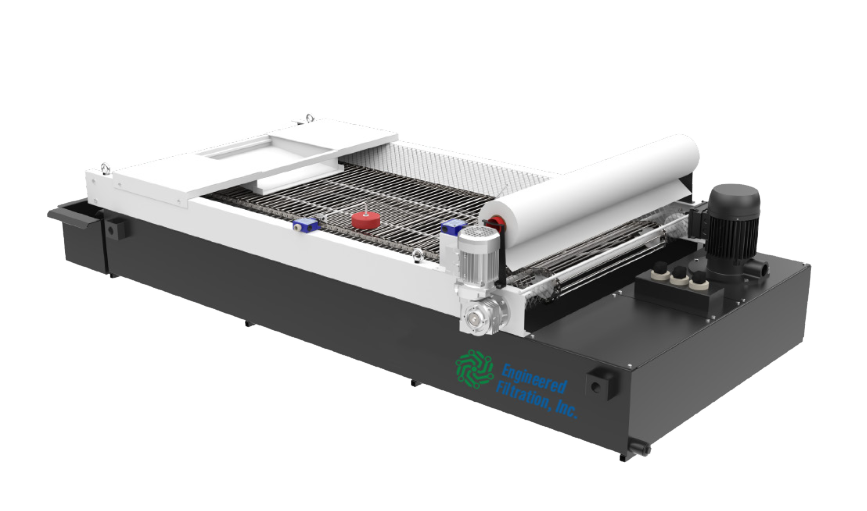
Gravity Bed Filters
High-flow disposable-media filtration for fine titanium and superalloy fines. Configurable to sub-10 micron.
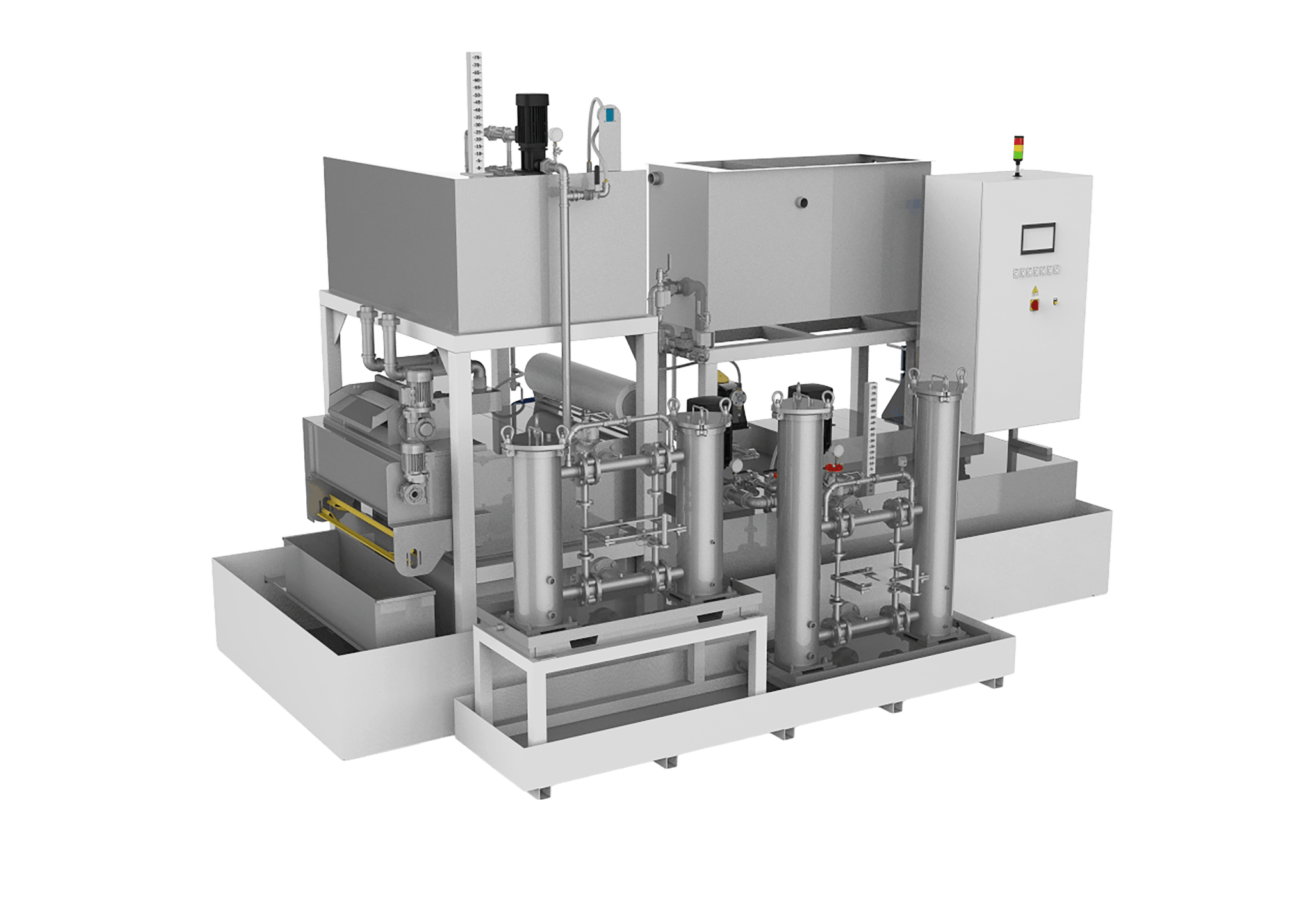
Custom Engineered Systems
urnkey solutions including dust-rated paths, pressure handling, and AS9100-compatible documentation.
TECHNICAL SPECIFICATIONS
Reference Configuration for Aerospace Cells
Common Materials
- Titanium alloys (Ti-6Al-4V and variants — airframe and engine components)
- Inconel and other nickel-based superalloys (turbine components)
- Hastelloy and Waspaloy (high-temp engine sections)
- 7075 and other aerospace aluminum (structural)
- Stainless steels (precipitation-hardened grades)
- CFRP and other carbon fiber composites
- Aluminum-lithium alloys (modern airframe)
Common Processes
- 5-axis simultaneous milling (airframe and engine components)
- High-pressure through-spindle drilling (deep-hole work)
- Precision turning (engine shafts, landing gear)
- Tight-tolerance grinding (bearings, blade tips)
- Composite machining and trimming (CFRP airframe sections)
- Wire and sinker EDM (turbine blade cooling holes)
These specifications represent a typical aerospace 5-axis machining cell producing tight-tolerance components. Every aerospace operation is configured against the specific material profile, pressure regime, and quality plan.
| Parameter | Typical Recommendation |
|---|---|
| Typical flow rate | 15–200 GPM per cell |
| Coolant type | Water-soluble or straight oil (titanium often prefers neat oil) |
| Filtration target | 1–10 micron |
| Pressure regime | Compatible with 1,000–2,000+ PSI HPCe |
| Magnetic pre-filter | Optional — only for ferrous-rich mixes |
| Composite handling | Dedicated dust-rated path required for CFRP work |
| Documentation | Supports AS9100/NADCAP traceability |
| Architecture | Standalone preferred for tight-tolerance work; central possible for mixed cells |
BUSINESS CASE
The Aerospace ROI Calculation
In aerospace machining the dominant cost is rarely the filter or the coolant — it is scrap. A single rejected turbine disk or airframe component can carry six-figure replacement cost when factoring material, machining hours, inspection, and schedule slippage. Filtration ROI is calculated against scrap rate reduction, tool life extension on premium carbide and ceramic tooling, and the cost-avoidance of unplanned cell downtime.
Model the Cost of a Single Rejected Aerospace Part
Our ROI Calculator helps quantify the cost-avoidance economics specific to aerospace work — premium tooling, exotic alloy material cost, and the schedule impact of scrapped components. Most aerospace operations justify filtration on scrap reduction alone.
Compliance Context for Aerospace Suppliers
Built for AS9100 and NADCAP Audit Trails
Filtration systems supporting flight-critical machining must provide documented micron ratings, traceable replacement media, and predictable performance profiles that support the quality plan.
AS9100 and NADCAP audits routinely scrutinize coolant management as part of process control documentation. Filtration with traceable specifications, scheduled service intervals, and supplier-side documentation reduces audit friction and supports first-pass yield reporting.
FREQUENTLY ASKED QUESTIONS
Common Questions from Aerospace Manufacturers
What coolant filter is best for titanium machining?
Titanium machining requires filtration that handles fine, abrasive titanium chips while supporting safe chip removal (titanium fines are pyrophoric). Gravity bed filtration with fine-micron media is the primary recommendation, supported by a polishing stage when tight-tolerance work is involved. Magnetic separation is not effective for pure titanium because titanium is non-magnetic.
Do magnetic separators work for aerospace machining?
Magnetic separators are effective only for ferrous materials. They add value in aerospace cells that machine steel landing gear components, ferrous fasteners, or stainless steel parts, but they have no filtration function for titanium, Inconel, aluminum, or composite work.
What micron rating is required for aerospace tight-tolerance work?
Most aerospace tight-tolerance machining targets 5–10 micron coolant clarity, with the most demanding precision work (turbine blades, bearing surfaces, optical-grade finishes) benefiting from sub-5 micron polishing. The right target depends on the operation and the surface finish specification on the print.
How is coolant filtration documented for AS9100 audits?
AS9100 and NADCAP auditors look for documented filtration specifications (micron rating, flow capacity, replacement schedule), supplier documentation for replacement media, and evidence that the system is maintained per the published service interval. Filtration vendors that supply traceable spec sheets and standardized replacement media simplify the documentation burden significantly.
What is the best filtration approach for Inconel and superalloy machining?
Inconel and similar superalloys generate work-hardened chips that quickly degrade coolant performance. Gravity bed filtration with frequent media replacement is the most reliable primary stage, often paired with high-pressure through-spindle delivery (1,000–2,000 PSI). Coolant chemistry matters as much as filtration in superalloy work — the two should be specified together.
How is composite machining filtration different?
CFRP and other composite materials produce fine, conductive dust that behaves differently from metal chips. Conventional filter media blinds off in hours when exposed to composite dust, and the dust contaminates water-based coolant streams in ways that promote rapid biological degradation. Composite cells benefit from dedicated dust-rated filtration paths separate from metal-machining coolant streams when possible.
FINAL CTA SECTION
Engineered for Flight-Critical Production
Tell us about your aerospace machining program — material mix, tolerance class, audit regime, and the components driving your filtration requirements. We design against your actual quality plan, not generic specifications.