
Industry Solution · Hydraulics & Fluid Power
Coolant Filtration for Hydraulics & Fluid Power Manufacturing
Hydraulic and fluid power component manufacturing carries a unique constraint: the cleanliness of the finished part determines how it performs in service. Filtration systems engineered for valve bodies, manifolds, pumps, cylinders, and the precision components that downstream fluid power systems depend on.
CLEANLINESS
Drives downstream ISO 4406
VALVES
Micro-tolerance machining
MANIFOLDS
Cross-port contamination control
1µ
Sub-micron polishing capability
WHY IT MATTERS
Manufacturing Cleanliness Drives Service Performance
Hydraulic and fluid power components occupy a unique position in manufacturing: the cleanliness of the part as it leaves the machine directly determines its service reliability. A microscopic chip lodged in a valve land can cause a stuck spool weeks or months later. A burr or fine deposit in a manifold cross-port can degrade flow characteristics or cause premature wear in downstream components. The cleanliness regime of the production environment shows up in the field.
Most hydraulic component manufacturing happens on precision machining centers, Swiss-type lathes, honing machines, and lapping operations. Common materials include hardened tool steels (valve spools and bodies), brass and bronze (fittings, manifold blocks), aluminum (manifolds and selected component bodies), and ductile iron (heavy industrial components). Many cells run multi-material work where cross-contamination control is part of the quality regime.
CoolantFilters.com configures filtration systems for hydraulic and fluid power manufacturers — supporting the cleanliness, surface finish, and cross-contamination control that downstream fluid power performance requires.
INDUSTRY CHALLENGES
Filtration Challenges in Fluid Power Manufacturing
Hydraulic component manufacturing concentrates filtration challenges around micro-cleanliness and cross-contamination.
Micro-particles that fail valves in service
A chip too small to see can cause a stuck valve spool or eroded spool land. Coolant contamination during manufacturing translates directly into field reliability problems.
Cross-port contamination in manifolds
Manifold blocks have intersecting drilled passages that can trap chips and contaminants from the machining process. Coolant cleanliness affects how completely those passages can be cleared in post-machining cleaning.
Surface finish on valve and pump components
Valve spools, pump pistons, and similar components have surface finish requirements that affect leakage, friction, and wear in service. Recirculating fines mark surfaces and force rework.
Material mix and cross-contamination
Cells running steel, brass, and aluminum in adjacent operations face cross-contamination challenges. Filtration architecture should consider whether mixed-material contamination affects downstream cleaning or component qualification.
RECOMMENDED FILTRATION APPROACH
Filtration for Cleanliness-Critical Manufacturing
Hydraulic component manufacturing benefits from layered filtration with emphasis on fine-micron polishing. Magnetic separation handles ferrous fines from steel valve and pump component machining. Gravity bed filtration handles general polishing across mixed-material cells. Bag or cartridge housings provide the sub-micron polishing for the tightest cleanliness work.
Standalone systems are often preferred over central filtration in hydraulic manufacturing because cross-contamination between material types and between cleanliness classes is a documented concern. Central systems work well for high-volume production of a single component family — for example, a dedicated valve body production line — where the contamination profile is consistent.
Magnetic Separators
Non-consumable ferrous fines removal for tool steel grinding cells.
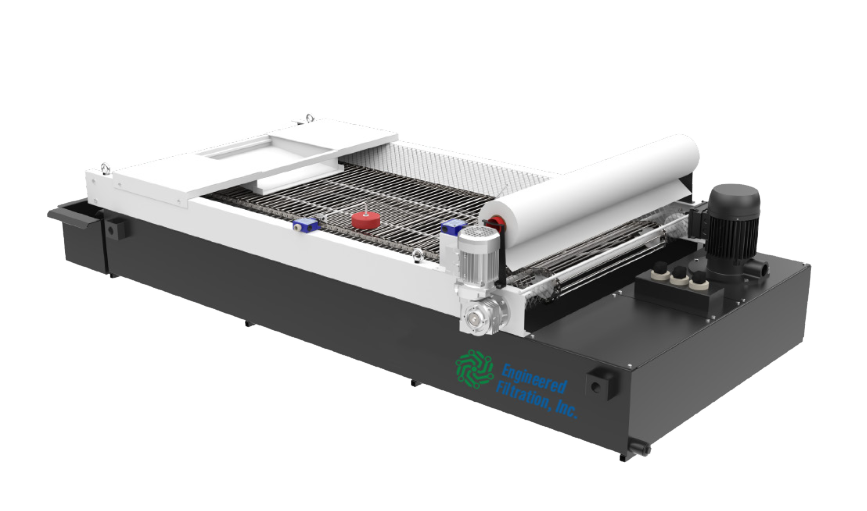
Gravity Bed Filters
Fine-micron disposable-media filtration for surface finish-grade clarity.
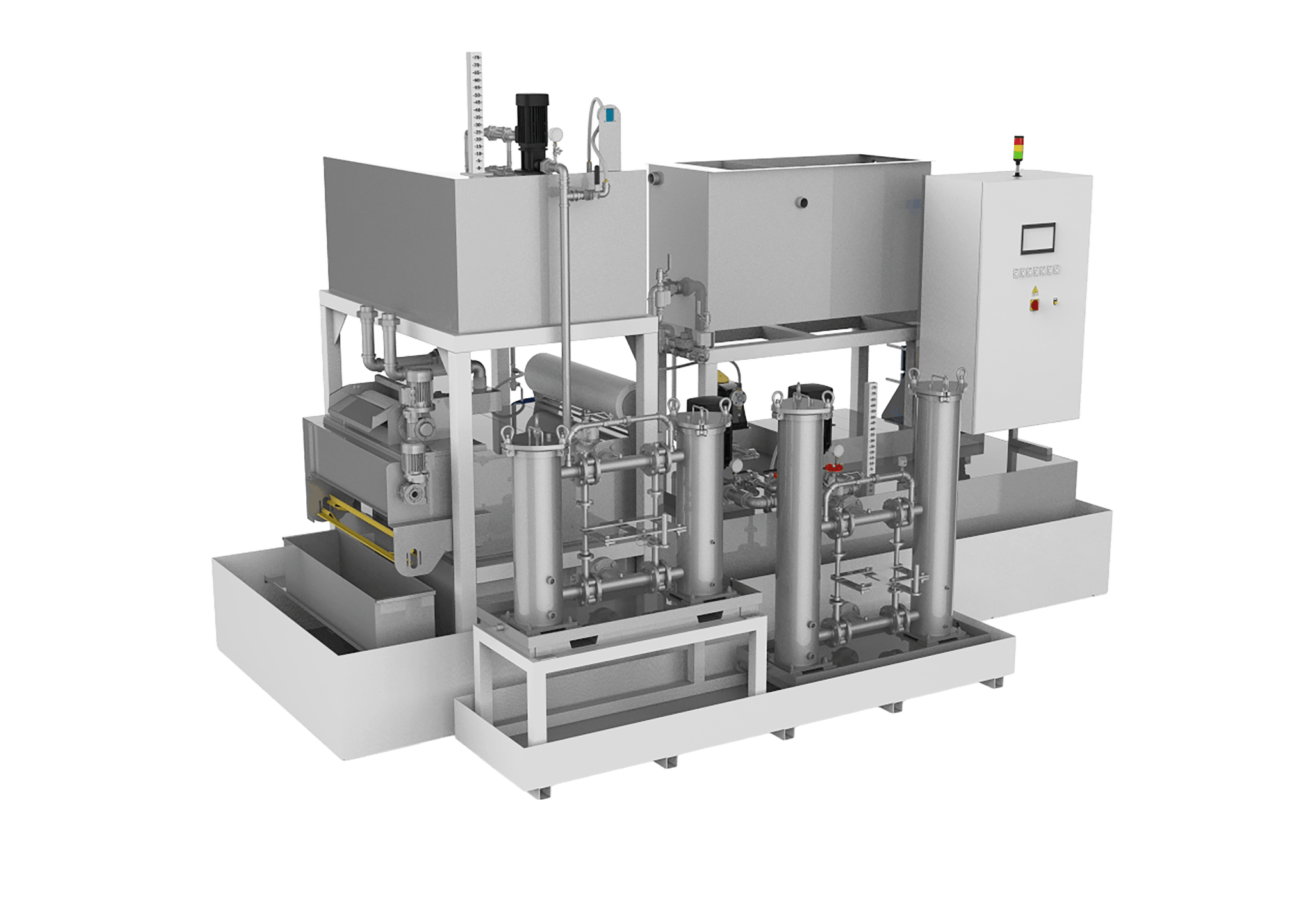
Bag & Cartridge Housings
Sub-micron polishing for the tightest surface finish requirements on rotating components.
TECHNICAL SPECIFICATIONS
Reference Configuration for Fluid Power Manufacturing
Common Materials
- Hardened tool steels (valve spools, pump pistons)
- Carbon and alloy steels (cylinder bodies, manifold blocks)
- Stainless steels (corrosion-resistant components)
- Brass and bronze (fittings, manifold blocks, bushings)
- Aluminum (lightweight manifolds, selected component bodies)
- Ductile iron (heavy industrial components)
Common Processes
- Precision boring (cylinder bodies, valve bodies)
- Honing (cylinder bores, valve spools)
- Lapping (mating surfaces, valve lands)
- Drilling and gun drilling (manifold cross-passages)
- Precision turning (spools, pistons)
- Surface and cylindrical grinding (valve components, sealing surfaces)
Hydraulic and fluid power manufacturing varies widely. The reference below covers a typical valve or pump component production cell.
| Parameter | Typical Recommendation |
|---|---|
| Typical flow rate | 10–150 GPM per cell |
| Coolant type | Water-soluble emulsion (most common), semi-synthetic |
| Filtration target | 1–10 micron |
| Magnetic pre-filter | Yes for steel-rich cells; selective for non-ferrous |
| Tramp oil management | Important for water-based cleanliness |
| Cross-contamination | Standalone systems preferred for mixed-material cells |
| Architecture | Central possible for dedicated single-family production lines |
| Documentation | Supports ISO 9001 and customer-specific quality plans |
BUSINESS CASE
The Fluid Power ROI Argument
In hydraulic component manufacturing the cost of poor filtration appears in two places: scrap on tight-tolerance components and warranty exposure on field failures. A single rejected valve body or pump assembly carries the cost of premium machining time on precision cells; a field failure from a contamination-related issue carries warranty replacement, customer relationship cost, and potential reliability statistics impact. Filtration ROI in fluid power is calculated against scrap reduction and against the long-term reliability of the components that ship from the line.
Model the Cost of Cleanliness-Driven Field Failures
Use our ROI Calculator to model the economics specific to fluid power manufacturing — premium component cost, precision machining time, and the long-term cost-avoidance of cleanliness-driven field issues.
Quality Context for Fluid Power Manufacturers
ISO 9001 and Downstream ISO 4406 Performance
Hydraulic and fluid power components are commonly specified to support specific ISO 4406 cleanliness levels in the finished system. Manufacturing cleanliness is the foundation that downstream cleaning and validation builds on.
For manufacturers serving mobile hydraulics, industrial hydraulics, aerospace fluid power, and similar regulated end-markets, manufacturing cleanliness directly affects warranty exposure and field reliability statistics. Filtration with documented specifications supports the supplier reporting and internal quality records that fluid power quality plans require.
FREQUENTLY ASKED QUESTIONS
Common Questions from Fluid Power Manufacturers
What coolant filter is best for hydraulic valve body machining?
Hydraulic valve body machining benefits from layered filtration: magnetic separation for ferrous fines, gravity bed filtration for polishing across mixed-material cells, and sub-micron bag or cartridge polishing for the tightest valve land work. Cleanliness is the dominant driver because contamination during machining translates into field reliability problems on the finished valve.
How does coolant cleanliness affect fluid power component reliability?
Manufacturing coolant cleanliness affects the contamination baseline that downstream cleaning has to remove. Fine particles lodged in valve spool clearances, manifold cross-ports, or pump piston-bore clearances can cause stuck valves, restricted flow, or accelerated wear in service. The cleaner the coolant during machining, the cleaner the part as it enters post-machining cleaning, and the more reliably it performs in the field.
What micron rating is needed for valve and pump component machining?
Valve and pump component machining commonly targets 1–10 micron coolant clarity, with the most demanding work (valve lands, pump piston-bore mating surfaces) benefiting from sub-5 micron polishing. The exact target should be set against the cleanliness specification and the post-machining cleaning capability.
Are central or standalone coolant systems better for fluid power manufacturing?
Standalone systems are often preferred in fluid power manufacturing because cross-contamination between material types and between cleanliness classes is a documented concern. Central systems work well for high-volume production of a single component family — for example, a dedicated valve body production line — where the contamination profile is consistent across cells.
How is coolant filtration documented for fluid power quality plans?
Fluid power quality plans frequently include documented filtration specifications, traceable replacement media, scheduled service records, and evidence that the system operates within published parameters. Filtration vendors that supply complete spec sheets, identified media, and standardized service documentation simplify the quality reporting that fluid power customers expect.
What is the role of tramp oil management in fluid power cells?
Tramp oil in water-based coolant accelerates biological growth, degrades fluid stability, and contributes to surface contamination on finished parts. In fluid power manufacturing where downstream cleanliness matters, tramp oil management with skimmers or coalescers is part of the standard filtration architecture, not an optional add-on.
FINAL CTA SECTION
Cleanliness That Carries Through to the Field
Tell us about your fluid power manufacturing — valves, pumps, manifolds, cylinders — and the cleanliness regime that drives your downstream service requirements. We will engineer a filtration solution against the standards your customers measure you against.